
Junnar Tourism Guide Best Monsoon Places to Visit Near Pune

The first monsoon shower changes Junnar completely. Dry hills turn green, streams begin to run across village roads, clouds sit low on the Sahyadris, and every turn opens into a quiet view that feels far away from city life.
For many travellers, the usual monsoon choices are Lonavala and Mahabaleshwar. They are beautiful, no doubt. But if you want a slower, less-crowded, more rooted Maharashtra experience, Junnar Tourism deserves your attention.
Junnar is not just a hill destination. It is a rare mix of forts, ancient caves, Ashtavinayak temples, waterfalls, ghats, farms, and old trade routes. It is also the birthplace region of Chhatrapati Shivaji Maharaj, which gives every hill and fort a deeper meaning.
At Fulgulab Lawns & Home Stay, Junnar, we often see guests arrive for a simple weekend and leave with a long list of places they want to return to. This local guide will help you plan your Junnar Monsoon trip with the best places, routes, food, safety tips, and simple itineraries.

Why Junnar is a beautiful alternative to Lonavala and Mahabaleshwar
Junnar has the same monsoon magic travellers look for: green valleys, waterfalls, cool air, foggy roads, and scenic viewpoints. The difference is the pace.
Here, mornings begin with temple bells, the smell of wet soil, and farmers heading to their fields. You may still find busy weekends around popular spots like Malshej Ghat or Shivneri Fort, but Junnar has enough space to spread out your trip and avoid the usual crowd pressure.
It is also a practical choice for a Weekend Trip from Pune. The drive is manageable, the roads pass through countryside and small towns, and the region offers something for every kind of traveller.
You can plan a trip around:
Forts and history
Ashtavinayak temple visits
Waterfalls and ghats
Ancient Buddhist caves
Family picnics and farm stays
Photography and birdwatching
Peaceful monsoon drives
Junnar feels best when you do not rush it. Keep time for tea breaks, local snacks, and unplanned stops. Some of the best views here appear between the famous destinations.
The best places to visit in Junnar during monsoon
Junnar has many spots, but a few places define the region. If this is your first visit, start with these.
Shivneri Fort is the heart of Junnar
Shivneri Fort is one of the most important places in Maharashtra’s history. It is known as the birthplace of Chhatrapati Shivaji Maharaj, and for many visitors, it is the emotional highlight of the trip.
The climb is not too difficult for regular walkers, but monsoon makes the steps slippery in places. Go early in the morning if possible. The air is cooler, the light is soft, and the views of Junnar town and surrounding fields are beautiful.
Inside the fort, you can see historic structures, water tanks, gates, and spaces connected with Shivaji Maharaj’s early life. Take your time here. It is not just a fort to “cover”; it is a place to feel.
Local tip
Carry water, wear shoes with good grip, and avoid climbing during heavy rain or low visibility.
Lenyadri and Ozar offer peaceful temple visits
Junnar is blessed with two Ashtavinayak temples nearby, Lenyadri and Ozar.
Lenyadri Ganpati temple is located in a group of rock-cut caves. The climb to the temple involves steps, and during monsoon, the surrounding hills look fresh and green. The cave setting gives the temple a calm, ancient feel.
Ozar Vighneshwar temple is easier to access and is often included with Lenyadri in the same trip. Many families plan their Junnar visit around these two temples and then add Shivneri Fort or nearby viewpoints.
If you are visiting during festivals or weekends, start early. Temple areas can get busy, and parking takes more time.
Malshej Ghat brings the classic monsoon drama
Malshej Ghat is one of the most loved monsoon drives near Junnar. It has mist, cliffs, waterfalls, winding roads, and valley views. On a rainy day, clouds move across the road and waterfalls appear from the dark rock faces.
The drive itself is the experience. Stop only at safe, marked areas. Avoid standing close to edges or stepping onto slippery rocks for photos. Malshej is beautiful, but the weather changes quickly.
This area is best for travellers who enjoy scenic drives, photography, and fresh mountain air. Keep a light jacket handy because strong wind and rain can make it feel much cooler than Junnar town.

Kalu Waterfall is for serious monsoon views
Kalu Waterfall is among the most striking waterfall spots near the Malshej region. During monsoon, the fall looks powerful and dramatic, especially from safe viewpoints.
The area can be slippery, and access conditions may change depending on rainfall. Do not attempt risky trails without a local guide. If the weather is rough, enjoy the view from a safe distance rather than trying to reach the base.
For photography lovers, this is one of the finest monsoon scenes around Junnar. Go with patience and respect the terrain.
Naneghat connects nature with ancient history
Naneghat is not only a scenic pass. It was once an ancient trade route through the Western Ghats. The caves and old rock-cut features remind visitors that people crossed these mountains long before modern roads existed.
In monsoon, Naneghat becomes lush and misty. The reverse waterfall effect, when strong winds push water upward, is a well-known sight in this region when conditions are right.
Naneghat is best visited with proper footwear and enough daylight. If you plan to trek, check local conditions first. The trail can become tricky in rain.
Junnar’s caves are quiet windows into the past
Junnar has a rich collection of ancient rock-cut caves, including groups around Lenyadri, Shivneri, Manmodi, and Tulja. These caves show how old and culturally important the region is.
Some caves are easier to reach than others. If you enjoy history, architecture, or quiet places, keep half a day for cave visits. Monsoon adds beauty, but it also makes paths slippery, so walk slowly and avoid touching carvings or leaving behind any waste.
Waterfalls, forts, caves, and those small monsoon moments
The famous attractions are only one part of Junnar. The real charm often lies in the smaller scenes.
You might see a seasonal waterfall flowing beside a village road. You might stop near a field where clouds are sitting over the hills. You might find a small tea stall serving hot bhaji just when the rain becomes heavy.
Other forts and hill spots around Junnar also attract trekkers and history lovers. Depending on time, weather, and fitness, you can explore nearby fort routes with local guidance. Monsoon trekking should always be planned carefully. A simple walk can become difficult when fog, wind, and rain arrive together.
For many guests at Fulgulab Lawns & Home Stay, the best memory is not one single attraction. It is the full feeling of Junnar Monsoon: rain on the roof, green views from the road, hot food after a day out, and quiet evenings away from city noise.

Suggested itineraries for your Junnar trip
The best route depends on your starting point, travel style, and weather. Here are simple itineraries that work well for first-time visitors.
Trip plan | Best for | Suggested route |
One-day heritage trip | Families and temple visitors | Shivneri Fort, Lenyadri Ganpati, Ozar Ganpati, local lunch |
One-day monsoon drive | Scenic views and photography | Junnar, Malshej Ghat, safe waterfall viewpoints, tea stops |
Two-day relaxed stay | Couples, families, and groups | Day 1 for Shivneri, Lenyadri, Ozar. Day 2 for Malshej Ghat, Naneghat, local food |
Two-day nature and history trip | Trekkers and history lovers | Shivneri Fort, Junnar caves, Naneghat, Kalu Waterfall viewpoint if conditions are safe |
A simple two-day Junnar Monsoon plan
Day 1
Arrive in Junnar by morning or early afternoon. Visit Shivneri Fort first if the weather is clear. After lunch, plan Lenyadri and Ozar Ashtavinayak temples. Keep the evening slow. Return to your stay, enjoy local food, and rest.
Day 2
Start early for Malshej Ghat. Stop only at safe viewpoints and enjoy the waterfalls from a distance. If weather permits, add Naneghat or a Kalu Waterfall viewpoint. Return before dark, especially during heavy rains.
This plan keeps the trip balanced. You get history, temples, ghats, waterfalls, and enough breathing room.
Local food to try in Junnar
A Junnar trip feels incomplete without simple local food. Monsoon makes it even better.
Look for fresh, homely meals rather than fancy menus. The region is known for traditional Maharashtrian flavours, and many local eateries serve seasonal, filling food.
Try:
Bhakri with pithla or zunka
Thecha for a spicy kick
Vangyache bharit when available
Misal pav for breakfast
Kanda bhaji during rain
Poha or upma for a light morning start
Hot chai at small roadside stops
Seasonal farm produce based on availability
If you enjoy sweets, ask locally for fresh milk-based items or traditional homemade options. Availability changes from place to place, which is part of the charm.
At a home stay, the joy is in eating food that feels close to the land. After a wet day outdoors, even a simple plate of bhakri, dal, rice, and sabzi tastes special.
Travel tips for a smooth monsoon visit
Monsoon travel rewards planning. Keep your schedule flexible, and do not try to cover too much in one day.
Pack these essentials:
Shoes with strong grip
Light raincoat or poncho
Extra clothes and socks
Waterproof cover for phones and cameras
Small towel
Basic medicines
Power bank
Reusable water bottle
Torch if staying out after sunset
For travel, a private vehicle is convenient because many spots are spread out. Drive slowly on ghat roads. Keep headlights on in fog. Avoid sudden stops on curves, and never park in the middle of narrow roads for photographs.
Mobile network may be weak in some hilly patches. Share your rough plan with your stay host or family before leaving for remote areas.
Safety guidelines for forts, ghats, and waterfalls
Junnar is welcoming, but monsoon nature must be respected. Rain makes the Sahyadris powerful and unpredictable.
Follow these safety basics:
Do not enter fast-flowing water.
Avoid standing under waterfalls during heavy flow.
Stay away from cliff edges, especially in fog.
Do not cross overflowing streams.
Avoid unknown shortcuts.
Do not trek alone in heavy rain.
Listen to local warnings.
Start early and return before dark.
Keep children close at viewpoints and water spots.
If a place feels unsafe, skip it. There is always another view, another tea stop, another reason to return.
Responsible tourism keeps Junnar beautiful
Junnar is not just a tourist destination. It is home to farming families, temple communities, forest patches, wildlife, and old heritage sites. Responsible travel protects all of this.
Please carry your waste back. Plastic bottles, snack packets, and disposable plates spoil the same views people travel so far to enjoy.
Respect temple customs. Dress comfortably but modestly at religious places. Keep noise low in villages and near sacred sites. Ask before photographing local people, farms, or private homes.
At forts and caves, avoid writing on walls, touching carvings, or damaging steps and structures. These places have survived for centuries. Our job is to leave them unharmed.
Small choices matter. Use reusable bottles, support local food stalls, hire local guides where needed, and choose stays that understand the region.

How Fulgulab Lawns and Home Stay helps you explore Junnar
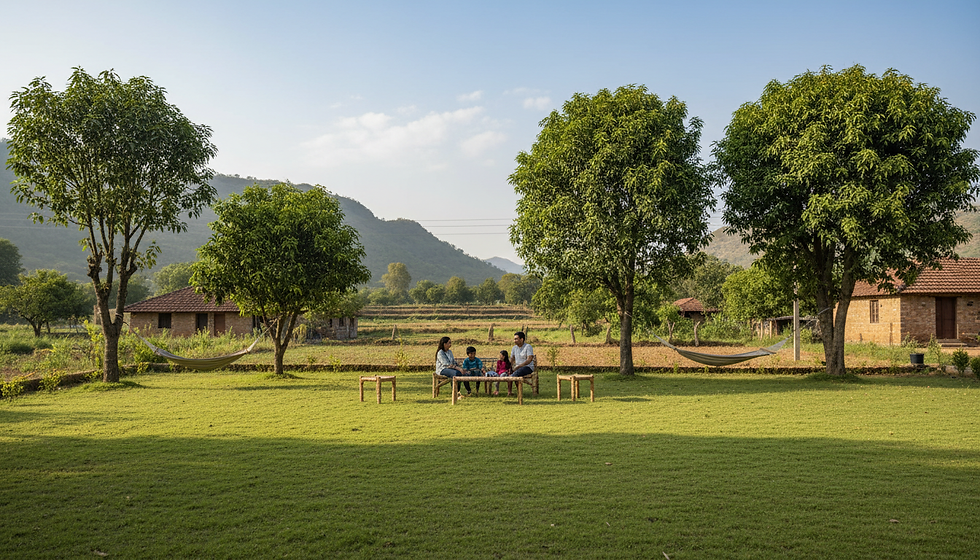
A good stay makes a monsoon trip easier. At Fulgulab Lawns & Home Stay, Junnar, guests get space to relax, slow down, and plan the day based on real local conditions.
We also provide guests with a free Junnar Tourist Guide PDF. It helps you understand nearby routes, major attractions, travel tips, and useful planning details before you step out.
This is especially helpful for first-time visitors because Junnar has many options. Instead of guessing what to cover, you can plan according to your time, weather, and interest.
Whether you are coming for Shivneri Fort, Ashtavinayak darshan, Malshej Ghat, Naneghat, waterfalls, or a peaceful weekend, staying locally helps you experience the region with more ease.
Plan your monsoon escape to Junnar with care
Junnar is one of those places that grows on you. Come once for the rain, and you may return for the history. Come for temples, and you may fall in love with the hills. Come for a weekend, and you may start planning a longer stay.
If you are searching for the best Places to Visit in Junnar, begin with Shivneri Fort, Lenyadri, Ozar, Malshej Ghat, Naneghat, Kalu Waterfall viewpoints, and the ancient caves. Then leave some time open for the quiet roads, green fields, and small local moments that no itinerary can fully capture.
From all of us at Fulgulab Lawns & Home Stay, Junnar, you are warmly welcome. Come enjoy the monsoon, support local people, respect nature, follow safety rules, and carry back memories without leaving anything behind. Junnar will give you beauty in abundance. Let us protect it together.


Comments